
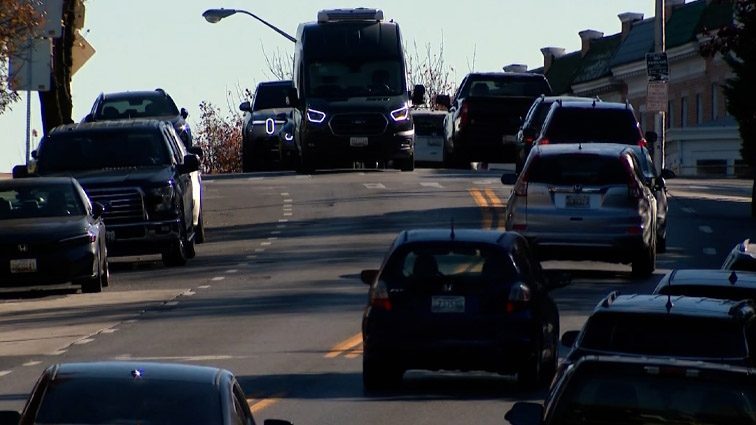
Thousands of Maryland drivers have complained about how much they are being charged by insurance companies, and state regulators are reviewing rates, WBAL-TV 11 News Investigates has learned.
The Maryland Insurance Administration told WBAL-TV 11 News Investigates that it’s taking a hard look at car insurance rates.
Maryland has some of the highest insurance rates in the nation, and one of the main factors insurers examine is where a policyholder lives.
“I think our biggest, No. 1 complaint is the price of auto insurance in Maryland,” Maryland Insurance Commissioner Maria Grant told WBAL-TV 11 News Investigates.
Tyrone Moore, a 60-year-old Park Heights resident and retired employee of the University of Maryland-Baltimore County, told WBAL-TV 11 News Investigates that his car insurance payments — for liability insurance alone — skyrocketed.
Moore recently hurt his leg, and with the cost of medical bills, food, energy and everything else increasing, he ran into trouble and couldn’t pay the $600 monthly premium for liability insurance. He said his 2015 Lincoln SUV is paid off, but this summer, he decided to just park it.
“I own the vehicle; I can’t drive it,” Moore told WBAL-TV 11 News Investigates. “Insurance (is) so crazy; I can’t afford it. (The car) was affordable; it’s not affordable now to drive.”
According to the Maryland Insurance Administration, 3,559 drivers filed complaints so far this year about their car insurance — and many of the complaints came from urban areas.
“Baltimore City is definitely an area that we hear concerns about,” Grant told WBAL-TV 11 News Investigates.
“If it’s the law to carry insurance, you have to make sure people can afford to obey the law.”
Having car insurance is a requirement under state law.
“If it’s the law to carry insurance, you have to make sure people can afford to obey the law,” said Marceline White, the executive director of the Economic Action Maryland Fund, a consumer advocacy group.
Because insurance is a legal requirement, Grant told WBAL-TV 11 News Investigates: “We really need to take a hard look at the affordability of auto insurance for exactly that reason.”
Grant shared several reasons why rates are high, saying insurers are looking at risks that include densely populated areas causing congestion, long commutes, accidents, car thefts, vehicles and the technology in them getting more expensive, along with rising costs for car and truck repairs.
The MIA told WBAL-TV 11 News Investigates that it is trying to find ways to reduce the high rates by using a data-driven approach and a work group to focus on a number of issues, including the impact of territorial ratings.
“Even how if you cross from one ZIP code to another, even if you’re just crossing the street, you’re seeing big shifts,” Grant told WBAL-TV 11 News Investigates.
“Even if you’re just crossing the street, you’re seeing big shifts.”
White is part of the MIA’s workgroup, along with Grant, a state senator, a state delegate, insurance industry representatives and consumer advocates.
“The problem is it costs too much,” White said.
White told WBAL-TV 11 News Investigates that other non-driving-related issues can also impact car insurance rates, from credit scores to marital status. In an unrelated study, White said her group found something else.
“We did a study with the Consumer Federation of America, and the more white a ZIP code is, the less they pay, and the more Black members live in the community, the more they pay,” White told WBAL-TV 11 News Investigates.
The MIA’s workgroup is examining what other states and Washington, D.C., are doing to bring down rates. One consideration includes creating a low-cost auto insurance program in Maryland.
“The General Assembly needs to take bold actions to address affordability,” White told WBAL-TV 11 News Investigates.
Moore said he’s glad someone is looking at the costs, but he thinks an important voice is missing.
“The General Assembly needs to take bold actions to address affordability.”
“Where is the regular person? Where’s me?” Moore told WBAL-TV 11 News Investigates.
With his vehicle parked, Moore is now getting rides from family, friends and neighbors. He said he’s applying for the Maryland Transit Administration’s Mobility bus service and remains hopeful.
“The light at the end of the tunnel (is) having faith and believing things will get better,” Moore told WBAL-TV 11 News Investigates.
The next step is to make recommendations to lawmakers in an effort to help make car insurance more affordable.


